
A partner in tackling child poverty
Fairer futures
Creating opportunity is central to the mission of universities. Widening access to people of all backgrounds to degree-level education remains a priority issue on which institutions have made strong progress, including introducing the most progressive admissions policy in the UK.
Beyond inclusion for their own student communities, universities work closely with multiple delivery partners, providing research and expertise and contributing to evidence-led policy development, often giving a voice to lived experience. This has made a tangible difference in tackling inequality and poverty-related stigma. Together, we support a fair and equitable start in life for every child, making a positive difference to families across the country.
Case Studies









UNIVERSITY OF GLASGOW
Tackling tooth decay in Scotland’s children
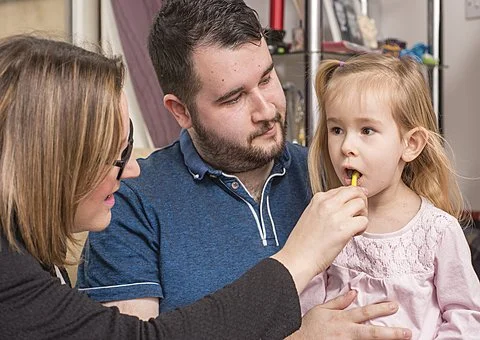
The University of Glasgow has supported the delivery of Childsmile, a Scottish Government sponsored, and NHS Scotland implemented programme designed to improve the oral health of children across Scotland. The University of Glasgow’s Dental School’s research helped in the development, implementation, and evaluation of the pilot programme in 2006, and continues to lead the evaluation and monitoring of the nationwide programme. The evaluation and monitoring work has involved mixed-methods research across all components of the programme including in nurseries, schools, communities, and dental practices. The evaluation of supervised nursery toothbrushing has shown it to be highly effective and a leading example of financial and environmental sustainability.
Tooth decay is a highly prevalent global health issue driven by socioeconomic inequalities. It can cause pain, infection, and hospital admissions, with impacts on school attendance and attainment. Since its nationwide roll out in 2011, Childsmile has decreased rates of tooth decay among 5-year-olds in Scotland from 32% in 2014 to 26% in 2020 and has been particularly effective at reducing tooth decay among children from the most socioeconomically deprived areas in Scotland. Since August 2013, the Childsmile approach has been adopted across the globe, including in Chile, England, Malawi, and the Netherlands. In 2019, the European Commission designated the Childsmile methodology, which is informed by the University of Glasgow’s research, as public health best practice.

Queen Margaret University
Unlocking potential
Queen Margaret University’s award-winning tutoring project in partnership with the University of Glasgow, saw just over 500 senior school pupils receive extra tutoring support from the two universities this academic year.
Aimed at school pupils impacted most by poverty, university students and graduates of both Queen Margaret and the University of Glasgow have been working as tutors in schools across Midlothian and Glasgow to engage young people in their studies and improve attainment.
The project is based on QMU’s Enhanced Learning Tutoring Initiative (ELTI), which was first launched in 2020 to support young people who were affected by the Covid-19 school closures. QMU initially worked with East Lothian Council, with support from the STV Appeal and other local supporters, to develop one-to-one tutoring to help senior school pupils who had fallen behind or disengaged with learning. The project aimed to ensure that pupils, no matter their background, were not disadvantaged in their learning, and were provided with the extra support they needed to achieve their potential at a crucial point in their educational journey.
Over the last five years, the project has gone from strength to strength, helping thousands of young people across East and Midlothian to achieve their learning potential. In 2025/26, thanks to a £90,000 investment from the Scottish Government, the successful education model was extended to wider group of young people across the central belt. This has included specialist one-to-one tuition for pupils, delivered online and in person, with the aim of helping them secure a place in university, training or further study. Tutoring has been delivered by students and graduates of QMU and University of Glasgow, as well as retired teachers, who have been enthusiastic about bringing their skills back into the workplace.
UNIVERSITY OF ST ANDREWS
Understanding the importance of sleep
Sleep is a powerful but often overlooked determinant of child health, learning, and wellbeing. Though taken for granted in many homes, children from families experiencing socioeconomic disadvantage are more likely to have disrupted sleep patterns, shorter sleep duration, with family stress and deprivation as major drivers. This contributes to poorer physical and mental health, reduced educational attainment, and higher risk of obesity.
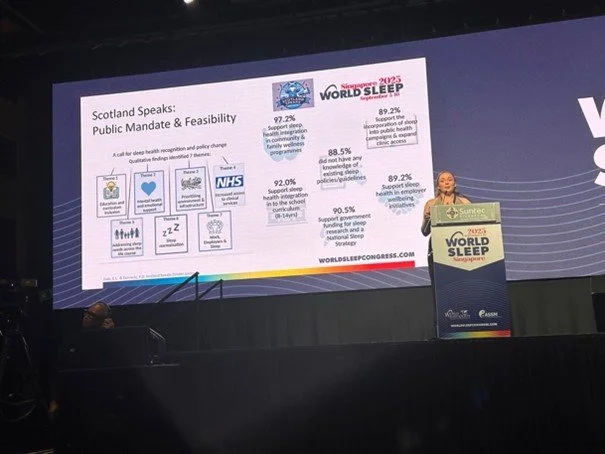
Researchers at the University of St Andrews’ School of Medicine have gathered national-level insights into child and adolescent sleep health through the Scotland Speaks project, which is the largest-ever survey of Scottish residents’ sleep health and experiences, conducted in partnership with the World Sleep Society.
The research is translated into practice through the Sleep Well Scotland programme. Working across four local authorities (Fife, Dundee, Angus, and Perth & Kinross) St Andrews University has delivered workshops and resources for schools, caregivers, and communities to improve sleep education. The project has reached over 2,000 children aged 10–12, ensuring their voices are heard in shaping solutions. Public engagement is central: the approach is co-produced with a Patient and Public Involvement (PPI) group including children, educators, caregivers, NHS Scotland clinicians, Public Health Scotland, and the charity Sleep Action.
The work has been recognised internationally, showcased as world-leading research and impact at the World Sleep Congress in Singapore (September 2025). It also connects with the Sleep Action Manifesto, a national call to recognise sleep as a cornerstone of health and wellbeing in Scotland and specifically for Children, to embed sleep health within the ongoing Curriculum for Excellence review. Embedding sleep into the curriculum and supporting families creates systemic change that addresses child health inequalities at their root.

ROBERT GORDON UNIVERSITY
Understanding food security in the North East
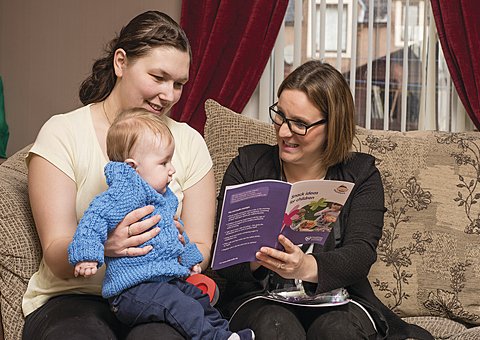
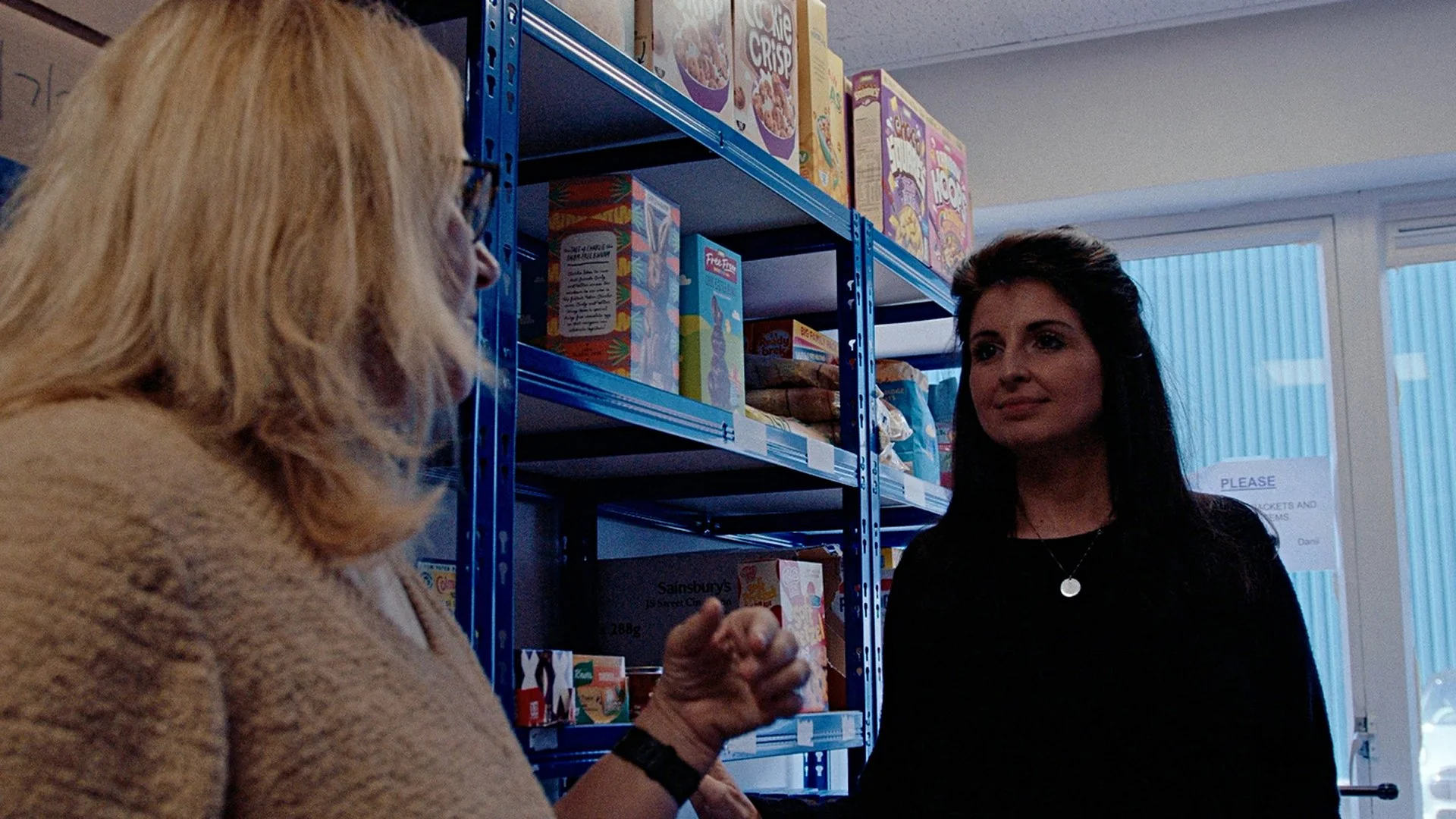
Robert Gordon University partners with communities in North-East Scotland to research the hidden nature of poverty and food insecurity amongst young mothers. Lone parents with children under five are amongst the most food insecure in the UK. Yet maternal and infant food insecurity experience remains poorly understood. The research, funded by NHS Grampian and the NHS Grampian Charity, aimed to assess the impact of national policies aimed at ameliorating child poverty in low-income households in the North East of Scotland.
Drawing on findings from qualitative research conducted with parents of infants and young children, and early years health professionals, Professor Flora Douglas from RGU’s School of Health, in partnership with healthcare professionals, conducted interviews with pregnant women and mothers with children under the age of five. These interviews showcased the stigma around using a food pantry and shame felt by those who use them. The research also highlighted that healthcare professionals lack the confidence to talk to parents about their financial wellbeing, making those with financial difficulties unaware of how to ask for help.
The research has shown there is an urgent need to develop a better understanding of the nature and extent of maternal and infant food security in the UK to develop more effective public policy and health care practice.
UNIVERSITY OF THE WEST OF SCOTLAND
Challenging bullying and poverty-related stigma
In partnership with Scotland’s anti-bullying service, Respect Me, University of the West of Scotland conducted research on anti-bullying, which led to development of a first-of-its-kind whole-school programme to prevent bullying motivated by prejudice.
The study, by Dr Maria Sapouna, showed that 31% of young people in Scotland experience bullying victimisation. Young people whose parents reported drug or alcohol misuse and females who were living with only one parent had higher odds of engaging in bullying others. Further analysis showed that females who had experienced three or more adverse childhood experiences were three times more likely to engage in bullying in mid-adolescence.
The research found that Adverse Childhood Experiences (ACEs) impact on the likelihood of young people displaying or experiencing bullying behaviour. ACEs are highly stressful and potentially traumatic events that occur during childhood or adolescence, either as recurring issues like emotional neglect or single events such as physical abuse. While not all ACEs result in trauma, they are strong predictors of bullying behaviour, with greater exposure to ACEs increasing the risk of either engaging in or experiencing bullying during adolescence.
This work further informed the national anti-bullying campaign, ‘Choose Respect’, to help increase empathy among children and young people.

UNIVERSITY OF DUNDEE
Raising awareness of early language in play settings
In partnership with Fife Council, the University of Dundee produced a tool, eLIPS (early language in play settings) that is used in early years education, to raise awareness of language development among early years educators and to help support the language skills of children in their care. The partnership began as a series of informal discussions with Fife Council about supporting the development of children from disadvantaged backgrounds and grew into a resource for early years practitioners, teacher educators, parents, researchers and professionals with an interest in language development.
Language quickly emerged as a focus as it is especially vulnerable to the effects of social deprivation. By getting support and intervention right in the early years, practitioners can help to prevent poor communication skills from damaging later well-being and learning as children grow older. This goal aligns with the key priorities of the Scottish Government in delivering excellence and equity in Scottish Education, especially the emphasis on high quality Early Learning and Childcare.

UNIVERSITY OF ABERDEEN
National guidance on school uniforms
The cost of school uniforms is an important issue for children living in poverty and the inability to afford the required uniform can impact on children and young people’s ability to access education.
Landmark research, led by University of Aberdeen in 2020, found that 96% of secondary schools in Scotland have a compulsory uniform, with more than half banning jeans, more than one in five banning trainers and almost one in five schools specifying an exclusive uniform supplier. While £22.5 million in clothing grants was paid out by local authorities during the 2021-22 school year, the research showed that grants are unlikely to meet the typical cost of a uniform and there was significant variation in the levels of grant above the national minimum, meaning that young people’s right to education could be jeopardised by rising school uniform costs and a ‘postcode lottery’ of financial aid accessible from local authorities.
The research has been hugely influential, with three political parties including a commitment to national guidance on school uniform in their manifestos for the 2021 Scottish Parliament election.
Acting in response to the research, in 2024, the Scottish Government published the first ever national guidance for local authorities and schools, focused on affordable, comfortable and sustainable school uniforms. It sets out how schools can help families by reducing uniform and PE kit costs, with the reuse of pre-loved uniform. It also explains what should be done to ensure equality, diversity and inclusion for pupils given considerations of stigma, gender, transgender, culture, religious beliefs.

UNIVERSITY OF THE WEST OF SCOTLAND
Tackling poverty through partnership
Through a partnership with UWS and Oxfam, academic expertise is used to tackle poverty and advance social justice campaigns. The partnership aims to promote a fairer and more sustainable Scotland by generating research that makes a real difference to families and children experiencing poverty.
Since its launch, the partnership has engaged with civil society organisations, local communities and policymakers to explore how public policy impacts poverty and inequality.
A series of six place-based policy workshops in Renfrewshire recently explored experiences of poverty and inequality at a local level. It heard from parents, carers and community organisations on the cost of living crisis, housing issues, barriers to training and employment, pressure on carers, and health inequalities. The discussion is being used to shape recommendations for public policy and practice.
Since 2019, the partnership has also prioritised research on care and caring, recognising the vital role of carers and care workers to society and the economy. This work culminated in a major report recommending a new national outcome on care in Scotland. The proposed outcome highlights how investment in care infrastructure can reduce child poverty by ensuring children receive the support they need, as well as lifting financial pressures on families. The report formed the basis of an Oxfam-led campaign, ‘A Scotland That Cares’, leading to Scottish ministers announcing their backing for a new National Outcome in Care in the revised Scottish Government National Performance Framework.
GLASGOW CALEDONIAN UNIVERSITY
Sharing evidence of effective interventions
The Scottish Poverty and Inequality Research Unit (SPIRU) at Glasgow Caledonian University works in partnership with the Poverty Alliance and other third sector stakeholders, local government, national government and others to investigate and develop effective responses to poverty and inequality in Scotland and beyond.
SPIRU’s work helped inform development of the Child Poverty (Scotland) Act 2017 which aims to maximise the support available for families to lead dignified lives and meet their basic needs, and to support the next generation to thrive. On behalf of the Scottish Government, SPIRU supports local authorities and local health boards in Scotland as they seek to meet their obligations to eradicate poverty under the Act. SPIRU is able to review the extent to which local actions are delivering on national goals, advising on data for profiling and evaluation, and brings together specialists to discuss mutual interests.
SPIRU has also developed a Tackling Poverty Locally Directory, a resource that is freely available to practitioners, policy-makers and researchers. As well as being fully searchable for anti-poverty work currently underway across Scotland, the database shares information on key learning points and the impact of different initiatives, in the form of a “how-to” guide, so that others can replicate it in their area and so that future initiatives build upon the experiences of communities and ensure that previous lessons are not lost. Examples of the initiatives featured in the Directory include Caledonian Funeral Aid, a non-profit funeral directors, focused on affordable funerals to overcome funeral poverty. The Directory allows users to search for initiatives proven to be effective in remote and rural communities or Scotland’s urban areas. The Directory is establishing itself as the world’s largest and most comprehensive Directory of local anti-poverty practice.
The co-directors of the Research Unit are Professor Stephen Sinclair, who also Chairs Scotland’s Poverty and Inequality Commission and Professor John McKendrick who is Scotland’s Commissioner for Fair Access to higher education and serves on the Tackling Poverty Programme Board.


UNIVERSITY OF THE WEST OF SCOTLAND
A new approach to understanding poverty stigma
Dr Greig Inglis, Lecturer in Psychology at UWS, is researching the effects of poverty stigma and its impact on people’s lives. Poverty stigma has been shown to have a direct impact on the mental health of both children and adults, reinforcing inequality.
Research by UWS and partners highlighted the mental health impacts of poverty stigma. Working with The Poverty Alliance, the Mental Health Foundation and the University of Strathclyde, Dr Inglis helped develop a new survey method to measure experiences of poverty stigma in the UK. The approach provided a more comprehensive understanding of stigma and highlighted the need for policy responses that address poverty and the harmful narratives surrounding it.
The survey method has since been adopted in Wales. Working with the Wales Centre for Public Policy, Dr Inglis contributed to the first Welsh national survey on poverty stigma, which found that one in four people in Wales had experienced it. The findings are being used to help ensure policy solutions are based on the lived experience of those directly affected by poverty and stigma.

UNIVERSITY OF DUNDEE
Understanding long-term impacts of Opioids in pregnancy
In partnership with the Chief Scientist Office and UKRI, the University of Dundee are investigating the long-term impact of exposure to opioids in pregnancy, exploring health, education, and justice outcomes for young people up to age 16.
This is following a study from 2019 which suggests that, worldwide, 61 million people use opioids with usage increasing in women and simultaneously rising in pregnancy. Women who use opioids during pregnancy are encouraged to stabilise on Medication Assisted Treatment (MAT) to reduce the risks associated with withdrawal or injecting. However, little is known about the impacts of different types of MAT on the child beyond the preschool period, or whether the treatment provided for Neonatal Abstinence Syndrome (NAS) affects their long-term development. Consequently, this treatment lacks an evidence base.
The study partnership uses routinely collected data to explore the pathways that children who have been exposed to opioids in pregnancy take through life. It also compares these children with a group of children who have been exposed to opioids in pregnancy through chronic pain medication, and a further group of children who have no exposure, but who look demographically similar to our main group of children.
This allows the University to look at whether children’s outcomes are being affected by being exposed to opioids in pregnancy, or whether any differences in outcomes are related to the environment in which children are being brought up.